
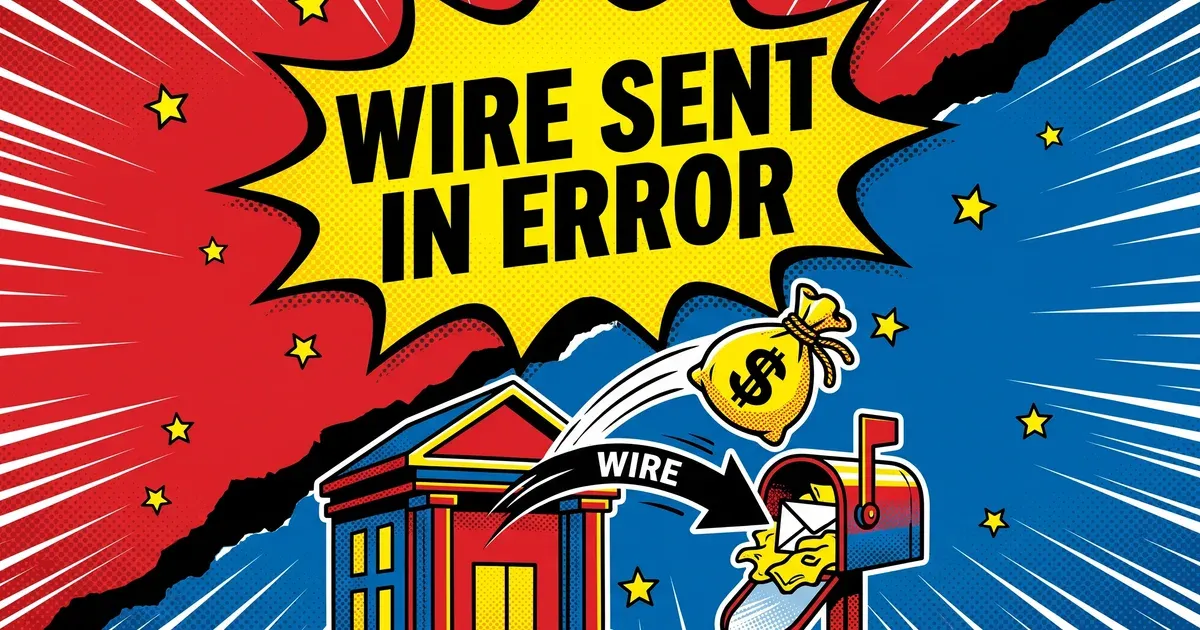
What Is a Wire Transfer Error Claim?
A wire transfer error claim is a lawsuit to recover money wired to the wrong account, in the wrong amount, or to a recipient who was obligated to return it, when the recipient refuses to send it back.
Common wire transfer error situations:
- Wrong account number on the wire instructions
- Duplicate wire sent twice
- Wire sent for the wrong amount with the excess kept
- Wire sent to a former vendor or contact by mistake
- Wire sent under a deal that fell through, with the recipient keeping it
- Recipient acknowledges the error but refuses to return the funds
Can You Sue the Recipient in Small Claims Court?
Yes, for amounts within your state's limit (typically $2,500 to $25,000).
Legal claims that apply:
- Unjust enrichment — money received by mistake must be returned
- Money had and received — the traditional claim for mistaken payment
- Conversion — keeping funds that belong to another
What You Need to Prove
- The wire — bank confirmation and statement
- The error — intended recipient or amount, instructions, messages
- The recipient's identity — account holder information
- Refusal to return — recall request results, your demand
Evidence to Gather
- Wire confirmation and bank statement
- Wire instructions and the correct recipient information
- Bank recall request and response
- Messages with the recipient
- Identifying information for the account holder
- Your demand letter
Step-by-Step: Filing Your Claim
Step 1: Request a Recall Immediately
Contact your bank the moment you discover the error.
Step 2: Identify the Recipient
Use bank assistance and wire details.
Step 3: Send a Demand Letter
State the amount, explain the error, and set a deadline.
Step 4: File and Serve
File in the county where the recipient is located.
Step 5: Present the Case
Show the wire, the error, and the refusal.
What You Can Recover
- The misdirected or excess amount
- Wire and recall fees
- Interest in some states
- Filing and service costs
Final Thoughts
A wire sent in error is still your money. When the recipient will not return it voluntarily, the wire records and the recall trail let small claims court order it back.
SmallClaimsHero makes the process easier by providing step-by-step guidance, helping you accurately complete required forms, and keeping your documents organized in one place. It helps reduce errors, avoid delays, and ensures you stay on track so you can focus on building a strong case and moving toward resolution with confidence.