
What Is a Wire Transfer Error Claim?
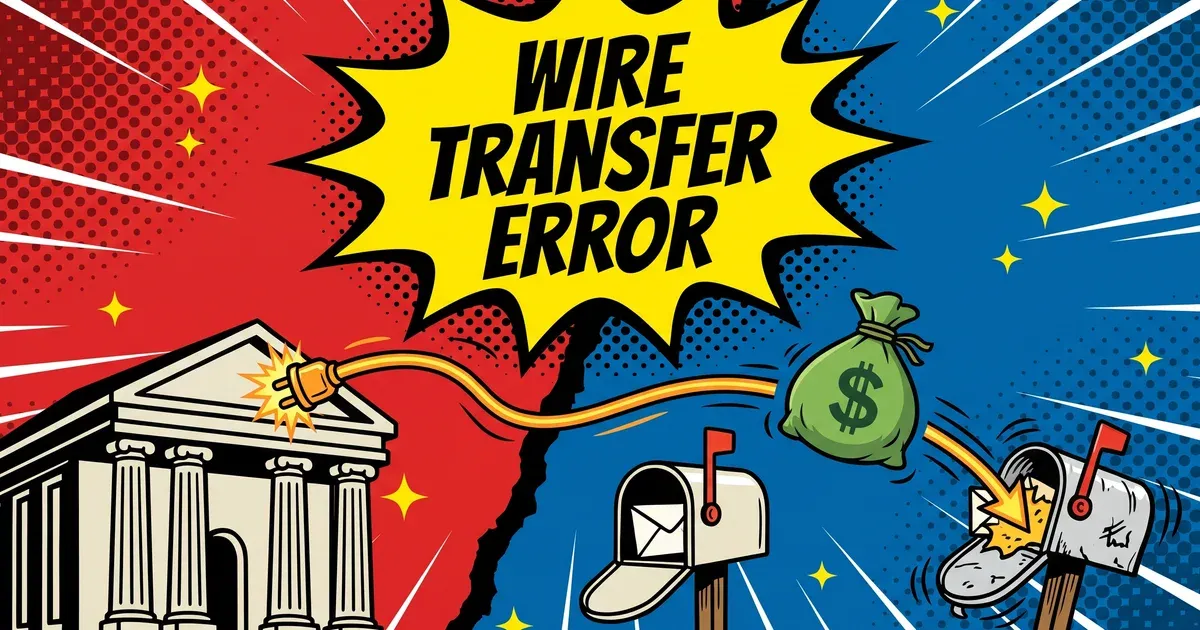
A wire transfer error claim is a lawsuit to recover funds that were misdirected, duplicated, or wrongly retained because of a mistake by you, your bank, the receiving bank, or the recipient.
Common wire transfer error situations:
- A wire sent to the wrong account number
- A bank entering the wrong beneficiary details
- A duplicate wire sent in error
- A recipient who received funds by mistake and refuses to return them
- A wire delayed or lost between banks, with fees and losses as a result
- A wire sent for the wrong amount
- A business or individual overpaid by wire who will not refund the excess
Can You Sue Over a Wire Transfer Error in Small Claims Court?
Yes, for amounts within your state's limit (typically $2,500 to $25,000). Many misdirected wires fall in this range.
Legal claims that apply:
- Unjust enrichment or money had and received — against a recipient holding your funds
- Uniform Commercial Code Article 4A — bank liability for failing to follow instructions
- Negligence — careless handling by a bank or payment service
- Breach of contract — the bank's account agreement
What You Need to Prove
- The wire and its intended destination — your instructions and the confirmation
- The error — where the funds actually went and why
- Who is responsible — the bank's deviation from instructions or the recipient's retention
- Your demand and the refusal — recall requests, letters, responses
Evidence to Gather
- Wire transfer request form and confirmation
- Bank statements showing the debit
- Correspondence with your bank about the error and recall attempts
- Identification of the recipient and proof they received the funds
- Your demand letter to the recipient and their response
- Records of fees, interest, or losses caused by the delay
- Police or fraud reports if applicable
Step-by-Step: Filing Your Claim
Step 1: Request a Recall Immediately
Call your bank, request a recall or return, and get a case number.
Step 2: Identify the Recipient
Ask the banks for the recipient's identity, which they may release for recovery purposes.
Step 3: Send a Demand Letter
Demand return of the funds from the recipient, or compensation from the bank if it erred, by a deadline.
Step 4: File and Serve
File in your county. Name the recipient, the bank, or both as the facts warrant.
Step 5: Present the Case
Show the instructions, the confirmation, where the money went, and the refusal to return it.
What You Can Recover
- The misdirected or retained funds
- Wire fees and bank charges caused by the error
- Interest
- Filing and service costs
Final Thoughts
Money sent by mistake still belongs to you. Whether the error was the bank's or the recipient will not give it back, the wire records make the case in small claims court.
SmallClaimsHero makes the process easier by providing step-by-step guidance, helping you accurately complete required forms, and keeping your documents organized in one place. It helps reduce errors, avoid delays, and ensures you stay on track so you can focus on building a strong case and moving toward resolution with confidence.