
What Is a Neighbor Property Damage Claim?
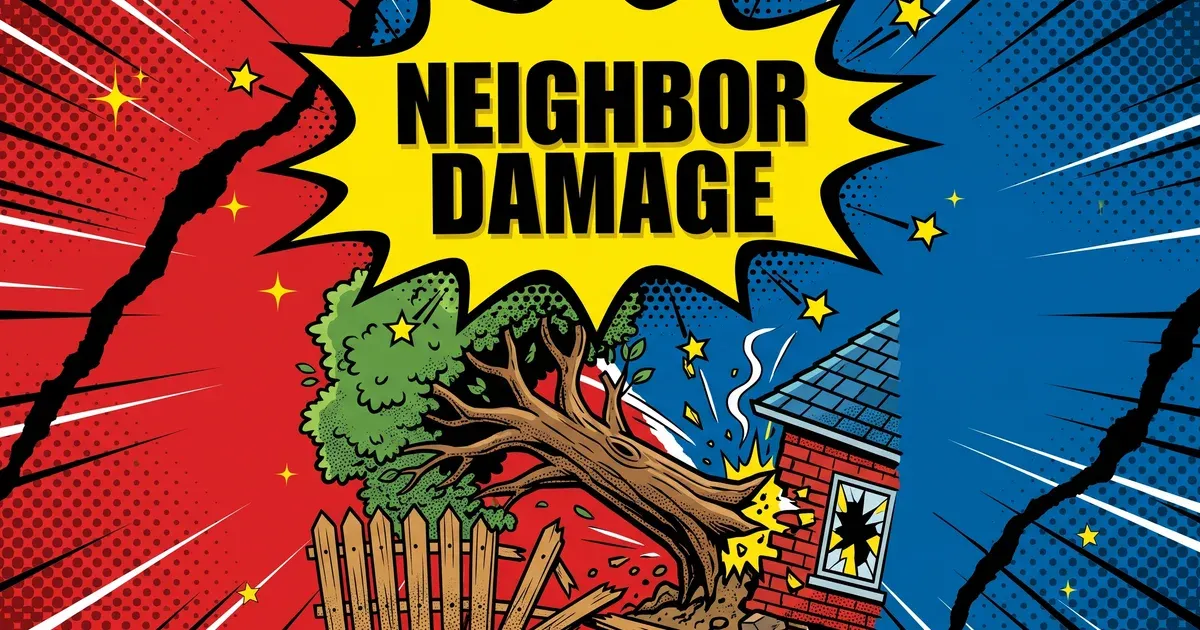
A neighbor property damage claim is a lawsuit against the owner of an adjoining property for harm caused by something on their land: a tree, a fence, a wall, a shed, grading, drainage, or construction. Liability depends on whether the neighbor was negligent, not simply on where the object came from.
Common neighbor damage situations:
- A dead or diseased tree falling on your roof, fence, car, or yard
- Tree roots cracking your driveway, foundation, or sewer line
- Large branches dropping and damaging structures below
- A neighbor's fence, retaining wall, or shed collapsing onto your property
- Regrading or a new patio that channels runoff into your yard or basement
- Construction debris, vibration, or excavation damaging your home
- Neglected gutters or downspouts dumping water against your foundation
Can You Sue a Neighbor for Property Damage in Small Claims Court?
Yes. As long as the repair cost is within your state's limit (typically $2,500 to $25,000), small claims court is the right venue, and it is often the fastest way to resolve a dispute that has soured a neighborly relationship.
Legal claims that apply:
- Negligence — the neighbor knew or should have known of the hazard and failed to fix it
- Nuisance — an ongoing condition on their land that interferes with your property
- Trespass — roots, branches, water, or debris physically intruding onto your land
- Strict liability for certain activities — blasting or inherently dangerous construction in some states
What You Need to Prove
- The source of the damage was on the neighbor's property — photos, survey, or plat
- The neighbor was negligent — the tree was visibly dead, you gave written notice, the wall was leaning for months
- The damage and its cost — photos and written repair estimates
- Your attempt to resolve — demand letter and the neighbor's response
Evidence to Gather
- Photos of the hazard before the damage, if you have them, and dated photos after
- Any letters, texts, or emails warning the neighbor about the hazard
- An arborist's report on the tree's condition, or a contractor's opinion on the structure
- Repair estimates from two contractors
- Your insurance claim file and deductible, if you filed
- Weather reports if the neighbor claims an act of nature
- Statements from other neighbors who saw the condition
- Your demand letter
Step-by-Step: Filing Your Claim
Step 1: Document and Mitigate
Photograph everything before cleanup. Make temporary repairs to prevent further damage and keep receipts.
Step 2: Establish Negligence
Get an arborist or contractor to state in writing that the tree or structure was in poor condition before it failed. Collect any prior warnings you gave.
Step 3: Send a Demand Letter
Describe the damage, cite the prior condition and any warnings, attach estimates, and set a deadline.
Step 4: File and Serve
File in the county where the property is located. Name the property owner, which may differ from the occupant; check county records.
Step 5: Present the Case
Lead with the evidence the neighbor knew of the hazard, then the photos of the damage and the estimates.
What You Can Recover
- Repair or replacement costs for damaged structures, vehicles, and landscaping
- Cleanup and debris removal
- Your insurance deductible and any uncovered loss
- Arborist or engineering report fees in many jurisdictions
- Filing and service costs
Final Thoughts
Neighbor damage cases turn on one question: did the neighbor know about the problem and ignore it? A prior warning, a dead tree, or a visibly failing wall answers that question, and small claims court awards the cost of repair.
SmallClaimsHero makes the process easier by providing step-by-step guidance, helping you accurately complete required forms, and keeping your documents organized in one place. It helps reduce errors, avoid delays, and ensures you stay on track so you can focus on building a strong case and moving toward resolution with confidence.