
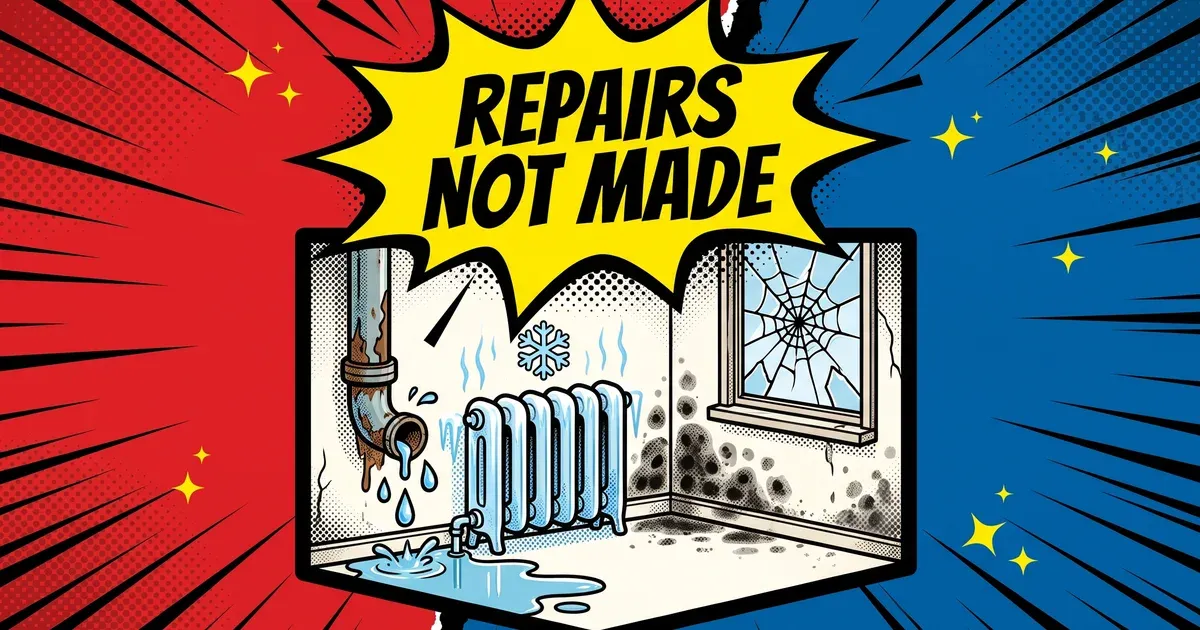
What Is a Habitability or Failure to Repair Claim?
A habitability claim is a lawsuit by a tenant against a landlord who failed to maintain the rental in a livable condition after being notified of the problem. It seeks money for the reduced value of the rental, the tenant's own repair costs, and losses caused by the conditions.
Common failure-to-repair situations:
- No heat, air conditioning where required, or hot water
- Plumbing leaks, sewage backups, or a non-working toilet
- Electrical hazards or outages
- Roof or window leaks and water intrusion
- Mold the landlord refuses to remediate
- Rodent, cockroach, or bedbug infestations
- Broken locks, doors, or windows affecting security
- Non-working appliances the lease includes
- Structural hazards such as collapsing ceilings or unsafe stairs
Can Tenants Sue for Failure to Repair in Small Claims Court?
Yes. Rent abatements, repair reimbursements, and property losses typically fall within state small claims limits (typically $2,500 to $25,000). Many tenants also raise these issues as a counterclaim when a landlord sues for rent.
Legal claims that apply:
- Breach of the implied warranty of habitability — the unit was not fit to live in
- Breach of the lease — the landlord's repair obligations under the written lease
- State repair statutes — repair-and-deduct and rent withholding rights
- Negligence — damage to your belongings or health from the conditions
- Retaliation statutes — penalties for punishing a tenant who complained
What You Need to Prove
- The defect existed and was serious — photos, video, inspection reports
- The landlord knew — your written repair requests and their responses
- A reasonable time passed without repair — the timeline
- Your losses — rent paid during the period, out-of-pocket costs, damaged belongings
Evidence to Gather
- Signed lease
- Every written repair request with dates, including portal messages and texts
- The landlord's responses or silence
- Dated photos and video of the conditions over time
- Code enforcement or health department inspection reports
- Receipts for space heaters, hotel stays, repairs you paid for, pest treatment, or spoiled food
- Medical records if the conditions affected your health
- Rent payment records for the affected months
- Your demand letter
Step-by-Step: Filing Your Claim
Step 1: Give Written Notice
Send repair requests in writing and keep copies. Most states require written notice before any remedy.
Step 2: Call Code Enforcement
Request an inspection and obtain the report.
Step 3: Follow Your State's Remedy Rules
If you repair-and-deduct or withhold rent, follow the statute exactly.
Step 4: Send a Demand Letter and File
Itemize the abatement and costs, give a deadline, then file in the county where the rental is located and serve the landlord or property owner.
Step 5: Present the Case
Show the timeline of requests, the photos and inspection report, and the calculation of abatement and costs.
What You Can Recover
- Rent abatement for the period of substandard conditions
- Reimbursement for repairs you paid for
- Out-of-pocket costs such as heaters, hotels, and spoiled food
- Damaged belongings
- Statutory damages for retaliation where applicable
- Filing and service costs
Final Thoughts
Landlords must provide a livable home, and the law gives tenants money remedies when they do not. Written requests, dated photos, and an inspection report make a habitability case that a small claims judge can decide in your favor.
SmallClaimsHero makes the process easier by providing step-by-step guidance, helping you accurately complete required forms, and keeping your documents organized in one place. It helps reduce errors, avoid delays, and ensures you stay on track so you can focus on building a strong case and moving toward resolution with confidence.