
What Is a Co-Signer Reimbursement Claim?
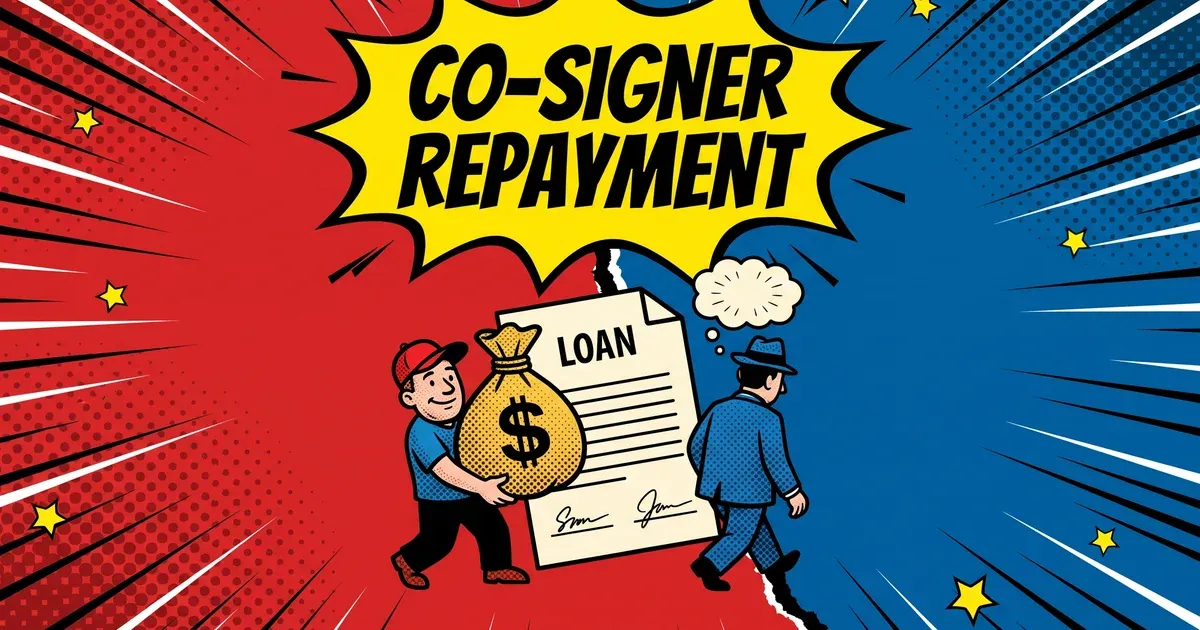
A co-signer reimbursement claim is a lawsuit by a co-signer or guarantor against the primary borrower to recover payments the co-signer was forced to make on the borrower's loan after default.
Common co-signer situations:
- Co-signed car loan that the borrower stopped paying
- Co-signed apartment lease with unpaid rent collected from you
- Co-signed personal or credit union loan in default
- Guaranteed a business loan for a friend or relative
- Co-signed a credit card or store account
- Paid a collection agency to stop pursuit on the borrower's debt
- Paid off the loan in full to protect your credit
Can a Co-Signer Sue in Small Claims Court?
Yes. Amounts paid on the borrower's behalf typically fall within state limits (typically $2,500 to $25,000).
Legal claims that apply:
- Indemnity — the primary borrower must reimburse a surety who pays
- Contribution — sharing of a debt between co-obligors
- Breach of agreement — any promise the borrower made to pay
- Unjust enrichment — the borrower benefited from your payments
What You Need to Prove
- You co-signed or guaranteed — the loan or lease documents
- The borrower defaulted — lender notices, collection letters
- You paid — bank records, lender receipts, collection settlements
- The amounts — a ledger of your payments
- Demand — your request and the response
Evidence to Gather
- Loan, lease, or guaranty documents showing your role
- Lender default and demand notices
- Records of every payment you made and to whom
- Collection agency correspondence and settlement records
- Messages with the borrower about the loan
- Credit report entries showing the default
- Your demand letter
Step-by-Step: Filing Your Claim
Step 1: Document Your Payments
Collect proof of each payment you made on the borrower's loan.
Step 2: Send a Demand Letter
State the total paid and a deadline. Offer a payment plan if you wish.
Step 3: File in Small Claims Court
File in the county where the borrower lives.
Step 4: Serve the Borrower
Serve by an approved method and file proof.
Step 5: Present the Case
Show the loan documents, the default, and your payments.
What You Can Recover
- All payments you made on the borrower's debt
- Interest and fees you paid as a result of the default
- Collection costs you incurred
- Filing and service costs
Final Thoughts
Co-signing is a favor, not a gift. Every payment you were forced to make is the borrower's debt to you, and small claims court orders them to repay it.
SmallClaimsHero makes the process easier by providing step-by-step guidance, helping you accurately complete required forms, and keeping your documents organized in one place. It helps reduce errors, avoid delays, and ensures you stay on track so you can focus on building a strong case and moving toward resolution with confidence.