
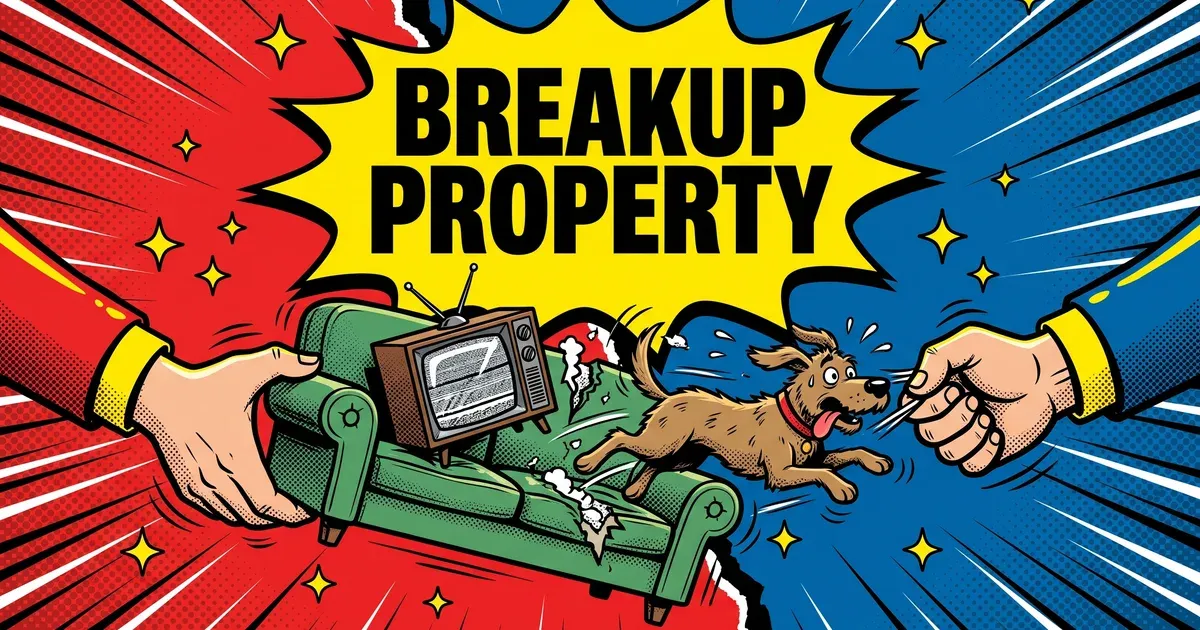
What Is a Breakup Property Dispute?
A breakup property dispute is a claim between former unmarried partners over furniture, electronics, vehicles, pets, and other items purchased together or by one partner and kept by the other after the relationship ended.
Common breakup property disputes:
- Jointly purchased furniture or electronics kept by one partner
- Items bought on one partner's card or credit and taken by the other
- A car or vehicle paid for by both and titled to one
- Pets purchased or adopted together
- Household goods left behind and disposed of
- Items purchased for a shared home that only one partner now occupies
- Money one partner contributed to the other's purchase
- Gifts between partners that one now demands back
Can You Sue an Ex Over Property in Small Claims Court?
Yes. The value of household items and contributions typically falls within state limits (typically $2,500 to $25,000).
Legal claims that apply:
- Conversion — your property taken or kept
- Partition or co-ownership principles — splitting the value of joint purchases
- Unjust enrichment — contributions to assets the other partner kept
- Breach of agreement — promises about ownership or repayment
- Replevin — return of specific property, where small claims allows
What You Need to Prove
- Who paid for each item — receipts, card statements, payment app records
- Any ownership agreement — messages, written agreements
- Who has the items now — photos, messages, moving records
- Values — receipts and current replacement or resale values
- Demand — your request and the response
Evidence to Gather
- Receipts and statements for every disputed item
- Messages discussing purchases, ownership, and splitting
- Photos of items in the shared home and after the split
- Lease, title, and registration documents
- Adoption or purchase records for pets
- A ledger of items, who paid, current value, and who holds them
- Your demand letter
Step-by-Step: Filing Your Claim
Step 1: Build an Item Ledger
List each item, cost, who paid, current value, and who has it.
Step 2: Propose a Settlement
Send the ledger with a proposed split or payment and a deadline.
Step 3: File in Small Claims Court
File in the county where your ex lives. Name them individually.
Step 4: Serve Your Ex
Serve by an approved method and file proof.
Step 5: Present the Case
Walk the judge through the ledger with the receipts behind each line.
What You Can Recover
- The value of your property kept by your ex
- Your share of jointly purchased items
- Contributions to assets titled to your ex
- Return of specific items where the court can order it
- Filing and service costs
Final Thoughts
Breakups are painful, but property division is arithmetic. A ledger of who paid for what, backed by receipts, lets a small claims judge split the value fairly.
SmallClaimsHero makes the process easier by providing step-by-step guidance, helping you accurately complete required forms, and keeping your documents organized in one place. It helps reduce errors, avoid delays, and ensures you stay on track so you can focus on building a strong case and moving toward resolution with confidence.